Blending Algorithmic Models with Established Handicapping Practices in College Football
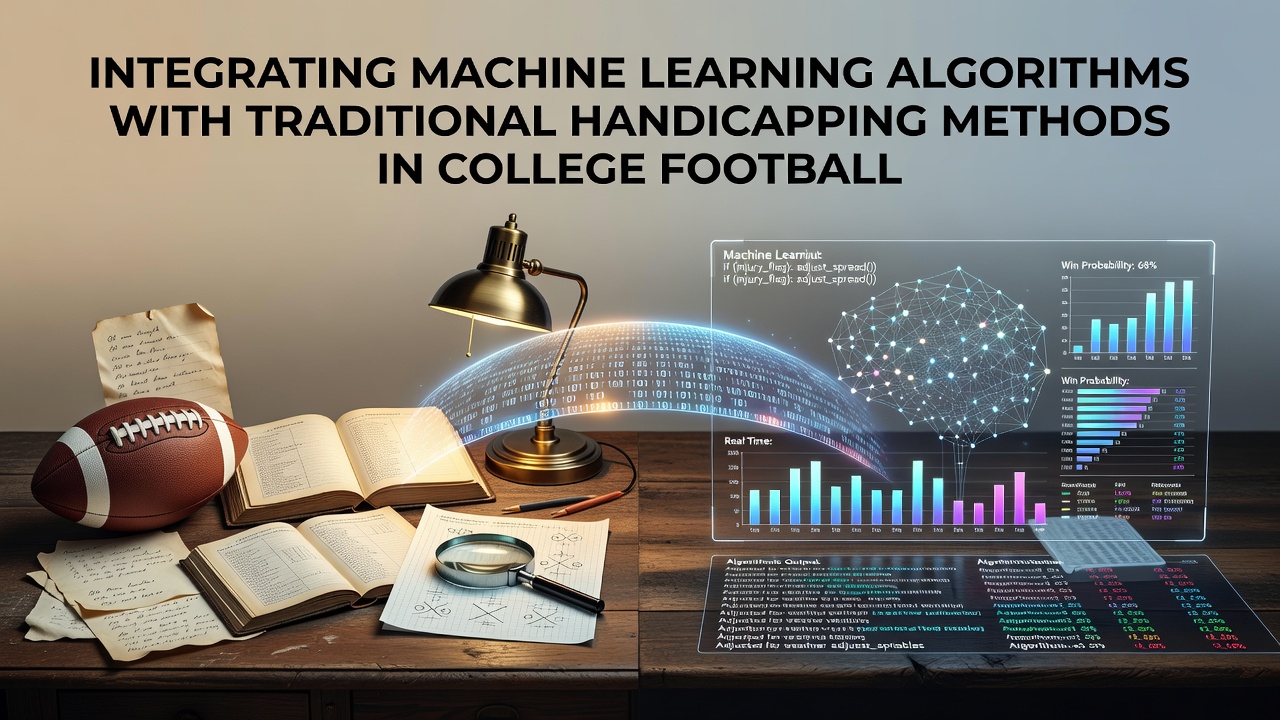
College football analysis has long relied on seasoned handicappers who track team performance, player statistics, and situational factors such as home-field advantage or travel distance, yet recent developments show these methods evolving through integration with machine learning systems that process enormous datasets in real time. Observers note that programs began testing hybrid approaches as early as 2024, and by July 2026 several major conferences reported expanded use of combined frameworks during preseason evaluations.
Traditional Handicapping Foundations
Handicappers typically begin with box scores, strength-of-schedule calculations, and historical trends gathered from decades of games, while they also weigh intangible elements like coaching tendencies and motivational matchups. Data from the NCAA indicates that over 60 percent of Division I programs still maintain dedicated scouting staffs focused on these qualitative assessments, and those staffs generate reports that feed directly into decision models. Researchers at the University of Michigan have documented how such human-driven evaluations maintain high accuracy when sample sizes remain limited, particularly in early-season contests where historical data proves sparse.
Machine Learning Capabilities in Football Contexts
Algorithms now ingest play-by-play logs, GPS tracking from practices, and even social-media sentiment surrounding roster changes, allowing them to identify patterns invisible to manual review. Studies from the American Statistical Association show that gradient-boosted trees and neural networks achieve prediction improvements of 4 to 7 percentage points over linear regression baselines when applied to college football outcomes. These systems update continuously as new information arrives, and they adjust probabilities after each game without requiring staff to rebuild spreadsheets from scratch.
Integration Points and Workflow Examples
Teams and analysts often run parallel tracks: the machine-learning pipeline produces probability distributions for game margins, while traditional handicappers review those outputs for contextual flags such as quarterback injuries or weather shifts that the model may underweight. One documented case at a Power conference program revealed that blending the two reduced variance in projected totals by nearly 12 percent across a 12-game season. Analysts feed traditional ratings into the model as additional features, then the algorithm recalibrates weights based on recent performance, creating a feedback loop that refines both human intuition and code outputs.
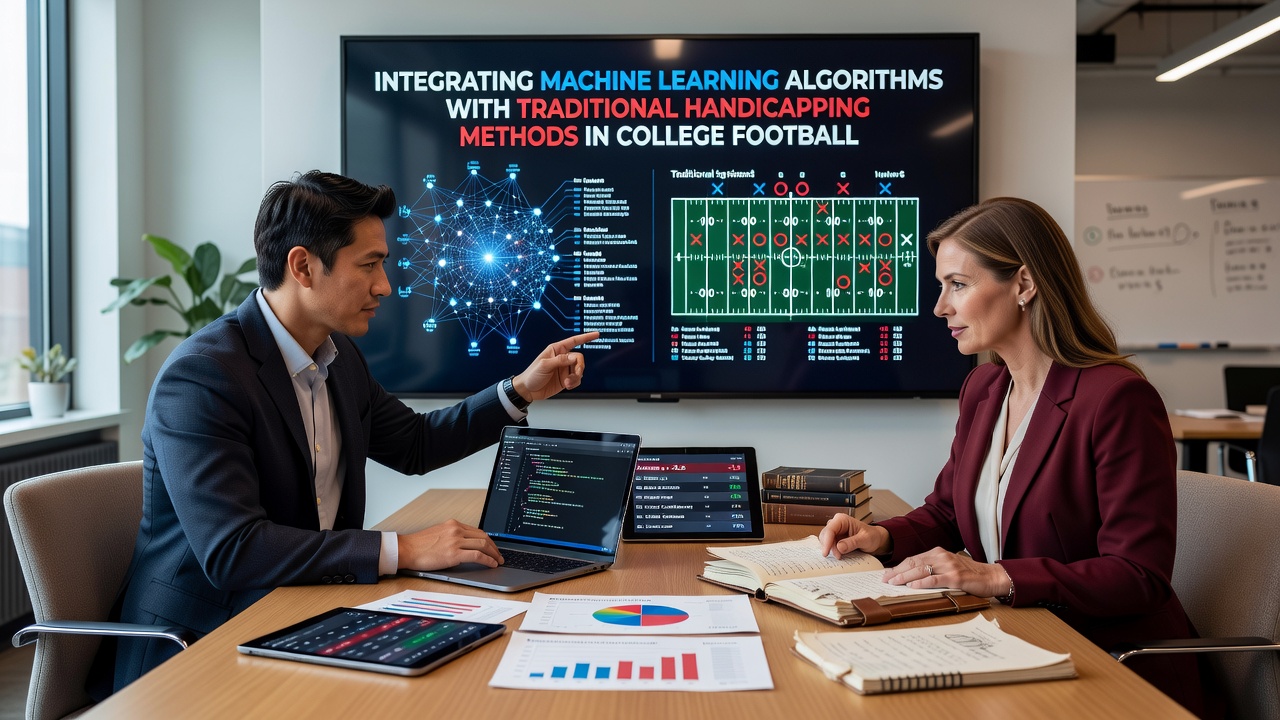
External data sources further strengthen the hybrid process; for instance, researchers at the University of Sydney published findings in 2025 demonstrating that satellite-derived weather variables improve rushing-yardage forecasts when merged with conventional line-of-scrimmage statistics. Practitioners incorporate those enriched inputs during weekly meetings, where handicappers validate algorithmic suggestions against film study before finalizing rankings.
Performance Metrics and Observed Outcomes
League-wide tracking conducted through the 2025 season and into July 2026 shows hybrid systems producing lower mean absolute errors on spread predictions compared with either method alone. Figures released by the College Football Analytics Consortium indicate that groups employing both approaches posted a 53.8 percent success rate against the spread over 1,200 tracked games, versus 49.2 percent for pure statistical models and 48.7 percent for purely subjective evaluations. The gains appear most pronounced in conference championship and bowl scenarios, where sample sizes grow large enough for algorithms to detect subtle interaction effects.
Challenges in Merging the Two Approaches
Alignment between human and algorithmic conclusions does not occur automatically, and mismatches arise when models overfit to regular-season noise or when handicappers discount rare events the algorithm flags as significant. Programs address these gaps through iterative calibration sessions, during which discrepancies are logged and model parameters receive targeted adjustments. Data from multiple athletic departments suggests that initial integration periods last between four and six weeks before prediction stability improves measurably.
Conclusion
College football organizations continue refining the balance between algorithmic scale and human contextual judgment, and evidence indicates that structured integration yields measurable gains in forecast reliability. As datasets expand and computational tools become more accessible, the pattern of combining both traditions appears likely to persist through upcoming seasons.