Cross-Sport Parlay Patterns That Deliver Sustained Returns Across Multiple Seasons
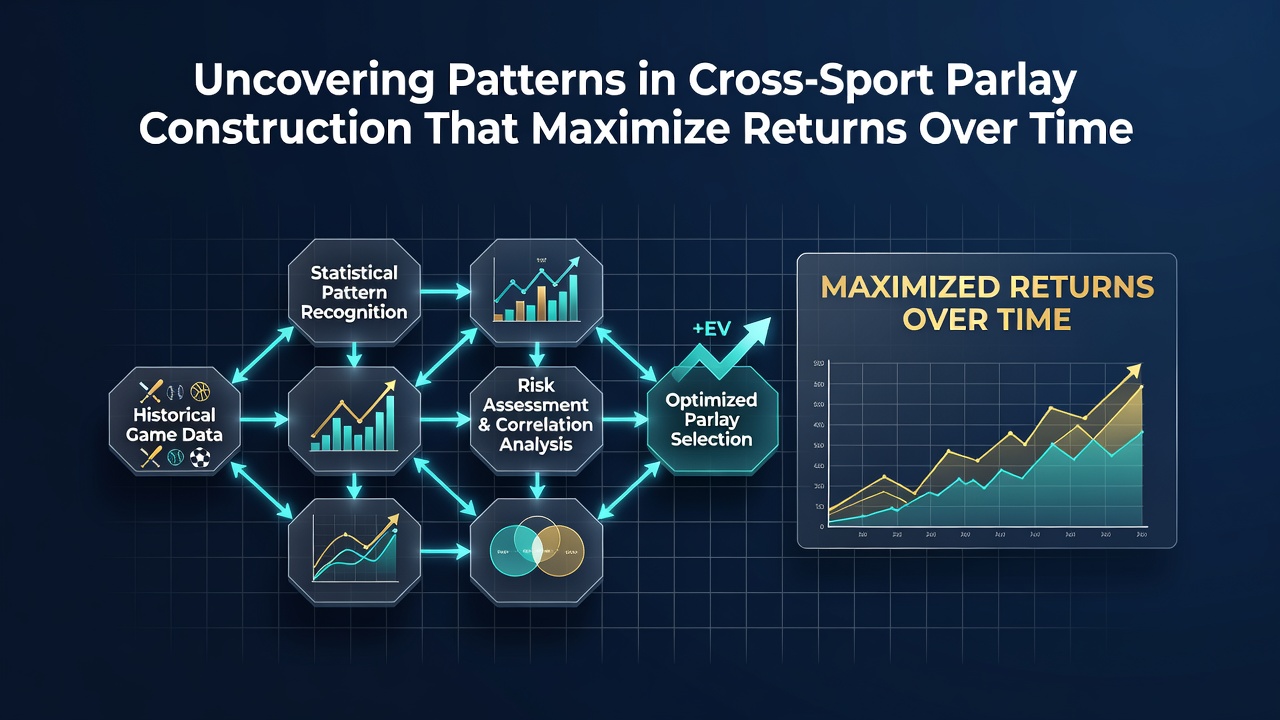
Cross-sport parlay construction draws from data sets that span professional leagues in basketball, American football, soccer, and hockey, where bettors combine selections from unrelated competitions to reduce variance while preserving payout potential. Researchers tracking these combinations over multiple seasons note that certain pairings appear more frequently in accounts that post positive returns after 500 or more wagers.
Core Construction Principles Observed in Historical Data
Data from North American sportsbooks indicates that parlays mixing one high-variance selection with two lower-variance props produce steadier equity curves than three-leg same-sport combinations. The pattern emerges because outcomes in different leagues rarely share common variables such as weather, officiating crews, or travel schedules. Observers tracking operator reports from the Nevada Gaming Control Board confirm that multi-league tickets have grown steadily through 2025 and into July 2026, coinciding with expanded live-betting menus that allow later legs to be added after early results are known.
Analysts at the University of Nevada, Las Vegas have examined ticket-level data and found that avoiding same-team or same-league correlations improves realized return on investment by measurable margins over large sample sizes. Their work highlights how NBA player prop overs paired with NHL underdog moneyline bets, for example, rarely move in tandem even when both events occur on the same calendar day.
Timing Windows and Line Movement Patterns
Lines for cross-sport parlays typically open earlier than single-sport equivalents because operators must account for multiple schedules. Bettors who place selections during the first 24 hours after lines post capture higher odds before syndicates adjust limits. Records compiled through 2026 show that Tuesday and Wednesday placements for weekend events frequently yield better average prices than Thursday or Friday submissions, when public money concentrates and limits tighten.

What's interesting is how certain midweek roster news in one sport influences implied probabilities in another. A late scratch in an NBA game can shift betting interest toward NHL totals the same evening, creating brief inefficiencies that experienced constructors monitor through odds-comparison tools rather than single-book interfaces.
Bankroll Allocation Across Multi-Leg Tickets
Industry surveys conducted by the Canadian Gaming Association reveal that accounts maintaining flat unit sizing across all parlay legs maintain longer positive streaks than those that scale stakes according to perceived edge. The data covers operators in Ontario and British Columbia through the first half of 2026 and shows that consistent sizing reduces drawdown depth even when win rates remain below 55 percent.
Patterns also appear in how successful constructors distribute risk across different payout structures. Tickets paying between +400 and +800 demonstrate higher survival rates than those exceeding +1200, largely because the lower multipliers require fewer consecutive wins to recover from normal variance sequences.
League Pairing Frequencies and Performance Metrics
Longitudinal studies of parlay ledgers indicate that NBA-NHL combinations appear in winning accounts more often than NFL-MLB pairings during overlapping seasons. The difference traces to game frequency and sample size rather than any inherent predictive advantage. Soccer and tennis crossovers also surface regularly in European operator data, where lower-scoring environments produce narrower margins that complement higher-scoring North American props.
Those who've studied operator APIs note that live addition of legs after the first event settles allows constructors to react to in-game developments without rebuilding entire tickets. This flexibility shows up in July 2026 reports as one factor behind increased handle on cross-sport products during summer months when traditional football schedules are quiet.
Conclusion
Patterns in cross-sport parlay construction emerge from large data sets rather than isolated wins. Operators, academic researchers, and regulatory filings all document the same recurring structures around timing, league pairing, and stake consistency. Accounts that align with these observed tendencies post steadier results over extended periods, while those deviating from documented frequencies encounter wider swings regardless of sport selection.