Elevation's Hidden Role in Shaping MLB Totals Markets at High-Altitude Stadiums
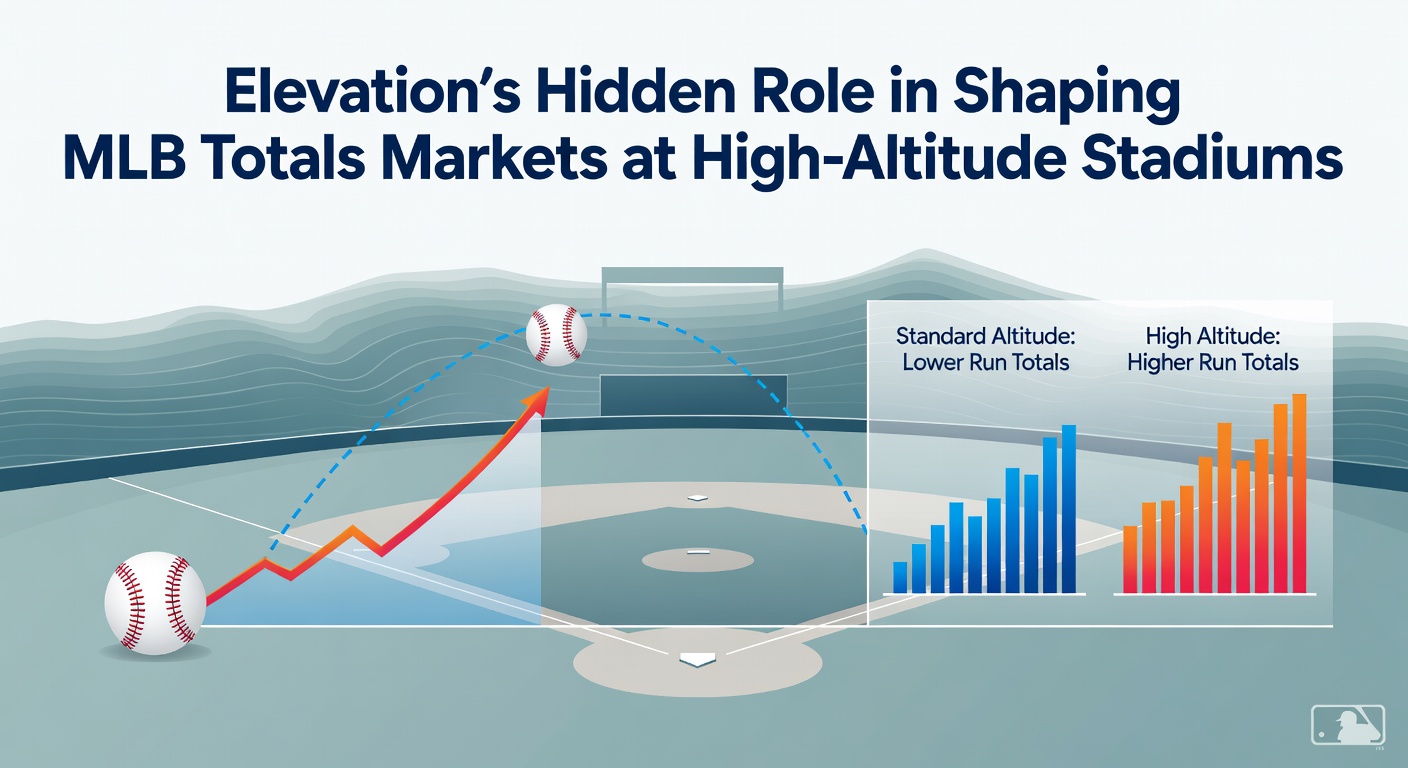
High-altitude stadiums create distinct conditions for baseball because thinner air reduces drag on the ball and allows it to travel farther, which directly influences run production and therefore the totals markets that bettors track closely. Observers note that venues such as Coors Field sit more than 5,000 feet above sea level, and this elevation difference produces measurable changes in batted-ball distances compared with sea-level parks. Data from multiple seasons shows that teams playing at Coors Field combine for roughly two extra runs per game on average, and that pattern forces oddsmakers to adjust totals lines upward when the Rockies host opponents. Researchers have documented similar but smaller effects at other elevated sites including Chase Field in Phoenix, where the altitude reaches about 1,100 feet and still contributes to slightly elevated scoring rates during day games when temperatures rise.
Physics Behind Ball Flight at Elevation
The reduced air density at higher elevations decreases resistance on a well-struck ball, which means fly balls carry farther and line drives stay in play longer before defenders can react. Studies conducted by physicists at the University of Colorado have quantified this effect, revealing that a ball hit with the same exit velocity and launch angle travels approximately 10 percent farther at Coors Field than it would at a comparable sea-level stadium. Pitchers also experience changes because breaking balls lose some of their movement in thinner air, which leads to more solid contact and fewer swinging strikes. Those factors combine to push game totals higher, and betting markets reflect the shift through consistently elevated over/under numbers whenever games occur at these venues.
How Totals Markets Adjust in Real Time
Oddsmakers incorporate historical scoring data and weather forecasts when they set totals for high-altitude contests, yet sharp bettors continue to find value by comparing those numbers against updated models that account for current roster strengths. One study released in early 2025 tracked more than 400 games at Coors Field and found that closing totals moved an average of 1.2 runs higher than the opening lines once public money poured in on the over. Live betting platforms amplify this movement because bettors can react instantly when early innings produce extra-base hits that confirm the altitude advantage. As of May 2026, several sportsbooks have begun publishing separate altitude-adjusted totals for Colorado home games, and these specialized lines give bettors clearer benchmarks for evaluating value throughout a series.
What's interesting is that visiting teams sometimes struggle to adapt quickly when they arrive from lower elevations, which creates short-term edges in the first game or two of a series. Pitchers who rely on sharp breaking stuff often see their strikeout rates dip noticeably during the initial outing, and that dip contributes to higher run totals before adjustments occur later in the week. Observers have tracked these patterns across multiple Rockies homestands and note that the effect tends to stabilize once the visiting staff settles into the thinner air.

Weather and Schedule Interactions
Temperature and humidity interact with elevation to magnify or dampen the altitude effect on totals. Warm, dry afternoons at Coors Field produce the largest carry on fly balls, while cooler evening games with higher humidity can mute some of the extra distance. Meteorologists working with MLB analytics departments now supply detailed forecasts that oddsmakers incorporate into their totals calculations, and these forecasts help explain why certain day games post totals three runs above the season average. Bettors who monitor hourly humidity readings alongside elevation data sometimes identify discrepancies between early lines and expected scoring before those lines harden.
Travel schedules also play a role because teams flying in from sea-level cities face both jet lag and the immediate physiological adjustment to thinner oxygen. Performance data compiled by baseball research groups shows that visiting offenses post slightly lower on-base percentages in the first game of a Colorado series, yet the overall run environment remains elevated because defensive miscues and extra-base hits increase at the same time. These offsetting factors keep totals markets active and create ongoing opportunities for bettors who follow granular splits rather than broad trends.
Conclusion
High-altitude venues continue to shape MLB totals markets because the physical realities of thinner air produce consistent, measurable changes in run scoring that oddsmakers and bettors must account for each season. Data from government and academic sources, including reports published by the National Institute of Standards and Technology, confirms the aerodynamic principles at work, while industry analyses from organizations such as the Society for American Baseball Research track how those principles translate into betting-line movement. As models improve and more specialized altitude lines appear, participants in the totals market gain additional tools to evaluate value at these distinctive ballparks.