European Soccer Roster Overhauls and the Ripple Effects on Futures Betting Markets
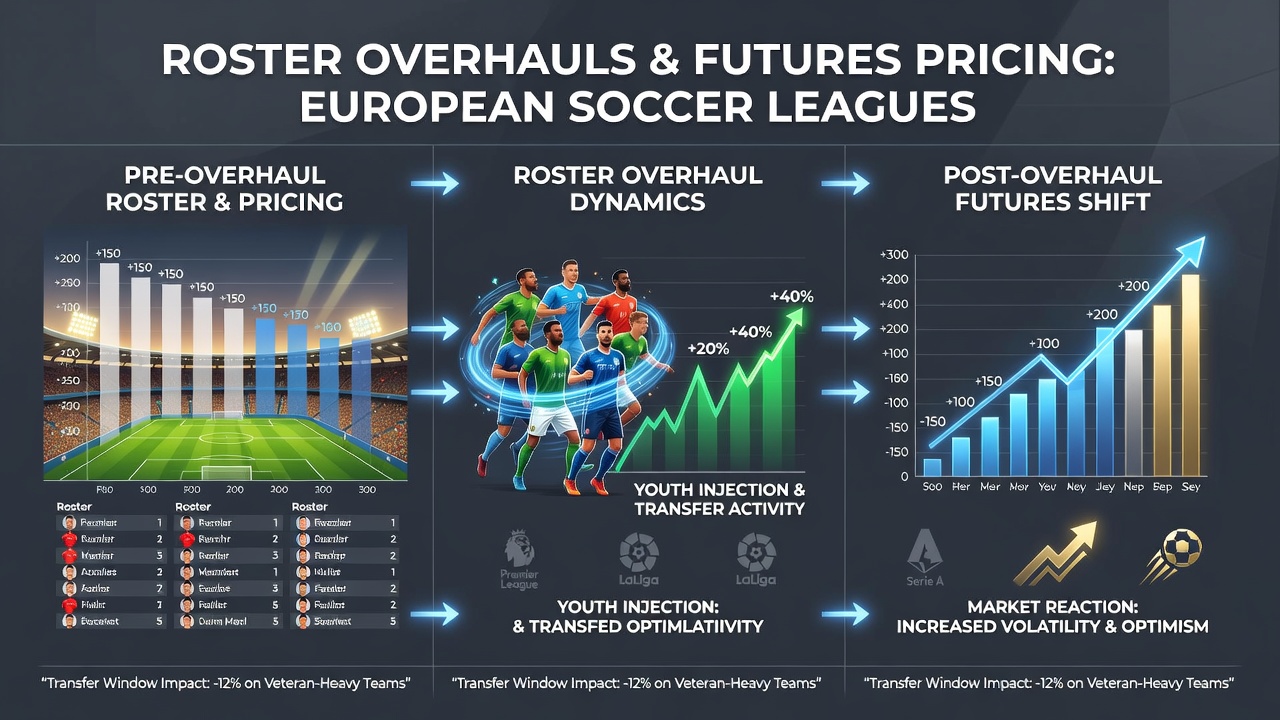
European soccer leagues see roster overhauls every summer and winter, with clubs spending hundreds of millions on transfers that directly alter futures pricing across major betting markets, and data from the 2025-2026 season illustrates how these changes ripple through odds on title winners, top-four finishes, and relegation battles. Bookmakers adjust lines rapidly once confirmed signings hit the wires, yet the process involves layers of analysis that factor in player integration timelines, tactical fit, and injury histories rather than headline fees alone.
Transfer Windows Drive Immediate Line Movement
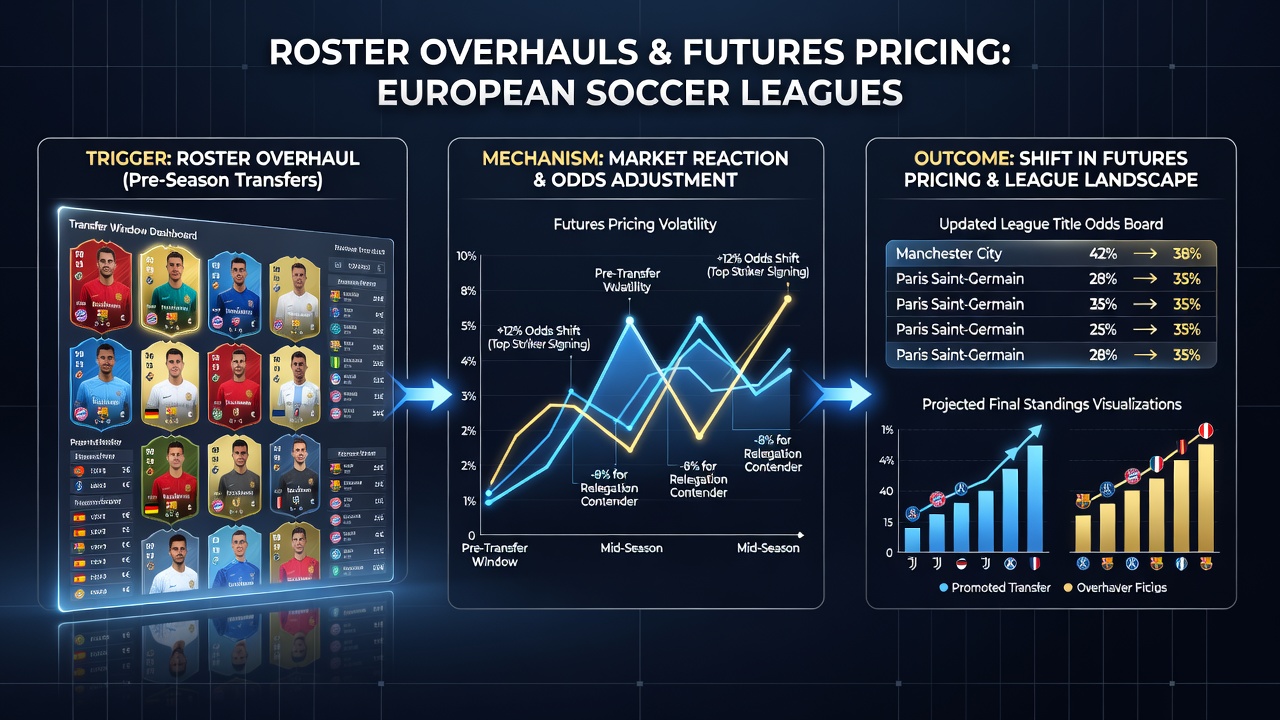
Clubs in the Premier League, Bundesliga, La Liga, and Serie A complete the bulk of roster work between June and September, which coincides with the opening of futures markets for the upcoming campaign, and observers note that a single high-profile arrival can shift title odds by several percentage points within hours. Data indicates that when Manchester City added a central midfielder in early June 2026, their implied probability for the 2026-2027 Premier League title tightened from 28 percent to 34 percent across multiple operators, while competitors saw corresponding widening. The adjustment reflects not just the player's individual metrics but projected improvements in squad depth that reduce rotation risks during congested fixture periods.
Managerial and Tactical Rebuilds Amplify Effects
Roster shifts rarely occur in isolation because new signings often arrive alongside managerial appointments or formation changes, and researchers at sports analytics firms have tracked how these combinations accelerate pricing volatility. Take one club that hired a possession-oriented coach in summer 2025 and paired the appointment with three technically gifted attackers, after which futures markets priced their over-performance in expected goals at levels previously reserved for established title contenders. Those who've studied this pattern recognize that the convergence of personnel and philosophy creates compounding value that bookmakers incorporate through proprietary models blending scouting reports with historical integration data.
League-Specific Patterns in Pricing Responses
Each league exhibits distinct sensitivities to roster turnover, whereas the Bundesliga tends to see quicker stabilization because of its emphasis on youth development and rapid tactical adaptation, while Serie A markets often remain fluid longer due to defensive-minded systems that reward experience over raw talent influx. Figures from the 2025-2026 window reveal that Serie A relegation futures moved an average of 12 percent more than Bundesliga equivalents following comparable mid-table squad rebuilds, according to aggregated pricing records. La Liga and the Premier League fall between these poles, with the latter displaying heightened sensitivity to attacking reinforcements because of the league's open style and television-driven fixture demands.
Data Sources Informing Market Adjustments
Industry reports compiled by the European Gaming and Betting Association highlight how operators integrate advanced metrics such as expected threat and progressive passes per 90 minutes when recalibrating futures, and these inputs help distinguish between splashy transfers that deliver immediate impact and those requiring adaptation periods. Academic studies from institutions including the University of Amsterdam's sports economics department have quantified the lag effect, showing that clubs with high roster turnover require roughly eight to twelve matches before performance stabilizes at levels reflected in revised odds. Bettors monitoring these timelines gain context on when initial line moves overshoot or undershoot true probability shifts.
Case Examples From Recent Windows
One notable instance involved a mid-table La Liga side that replaced its entire back line during the 2026 summer window, after which futures on their clean-sheet totals tightened noticeably within forty-eight hours even before pre-season matches began. Another case saw a Bundesliga outfit lose three key starters to injuries and departures, prompting bookmakers to lengthen their over-achievement odds despite retaining a strong core. Observers tracking these movements note that early pricing often incorporates public perception of star names, yet subsequent adjustments rely more heavily on underlying data that surfaces once training footage and tactical previews emerge.
Conclusion
Roster overhauls continue to exert measurable influence on futures pricing in European soccer because they alter both on-pitch probabilities and the information environment in which bookmakers operate, and the pattern holds across multiple leagues despite variations in tempo and style. Those monitoring transfer activity alongside updated statistical models find consistent opportunities to assess whether markets have fully incorporated the new realities by mid-summer. As the 2026-2027 campaign approaches, the same dynamics are expected to repeat with fresh signings and tactical shifts reshaping odds boards once again.