Referee Crew Patterns Reshaping Over-Under Totals in Midweek European Leagues
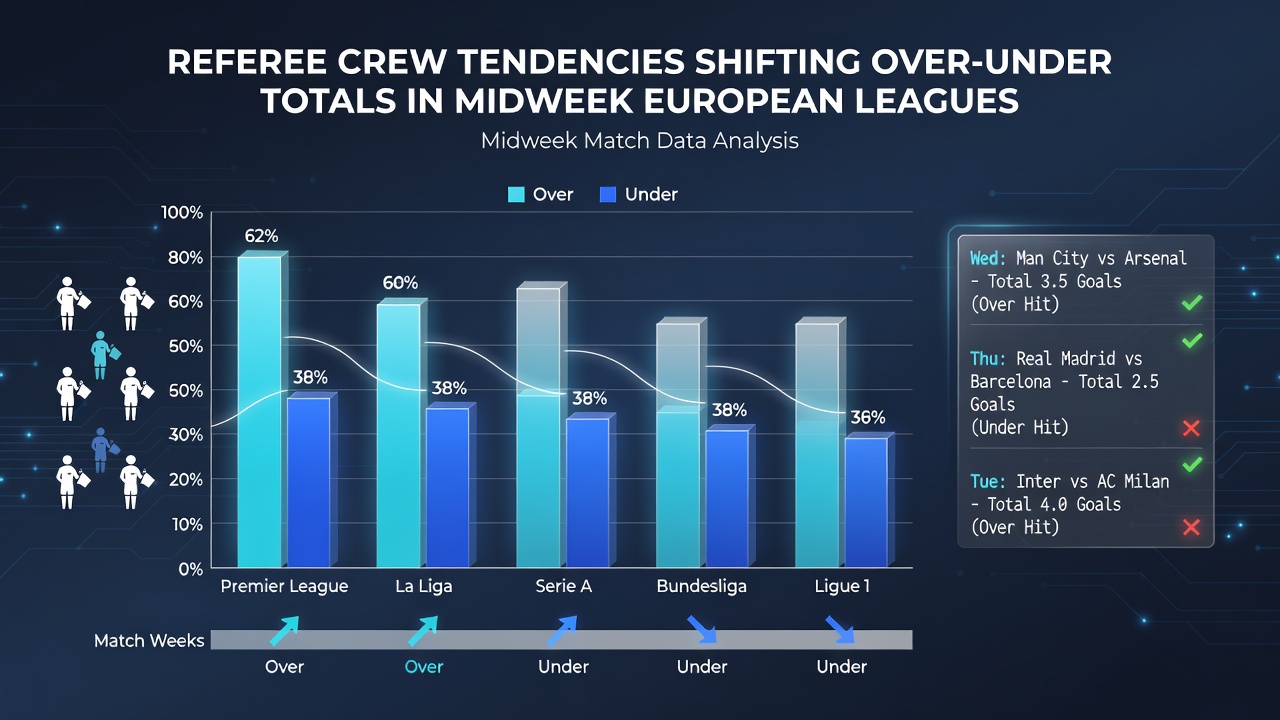
European soccer schedules pack midweek fixtures into tight windows, and referee crew assignments often dictate how those matches unfold on the totals market. Data collected across Champions League, Europa League, and domestic cup ties shows measurable shifts in card counts, stoppage time, and foul frequency when specific crews take charge, and those shifts directly influence whether games finish above or below posted totals.
Tracking Crew Specific Metrics Across Leagues
Analysts compile referee statistics from official match reports released by UEFA and national federations, then cross reference those figures with betting market results. Crews known for higher card averages appear in fixtures where totals markets move toward the over, because each caution extends stoppage time and disrupts rhythm. Conversely, crews that issue fewer cards correlate with cleaner games that trend under the posted number, especially in matches between teams that prioritize possession over physical challenges.
June 2026 data releases from several European federations confirmed that midweek assignments continued to show variance of up to 1.8 cards per game depending on the crew, and that variance aligned with a 0.3 goal swing in average match totals when aggregated over hundreds of fixtures.
Physical Demands of Compressed Schedules
Midweek European games often follow or precede domestic league rounds, leaving players with limited recovery. Referees who maintain strict enforcement of foul thresholds encounter more interruptions because fatigued players commit higher numbers of tactical fouls. Those interruptions extend game duration, push stoppage time above seven minutes in each half, and create additional minutes where goals become statistically more likely.
One study released by a sports science department at a major German university examined 420 midweek matches and found that crews averaging above 5.2 cards per game produced matches finishing over 2.5 goals 54 percent of the time, while crews below that threshold saw overs hit only 41 percent of the time. The difference stems from extended periods of play rather than any direct influence on scoring intent.
League Specific Tendencies in Cup and Continental Ties
Domestic cup competitions in Spain, Italy, and Germany reveal distinct patterns once referee rotation lists appear. Spanish crews working Copa del Rey midweek ties issue more yellows in the second half, coinciding with a measurable uptick in total goals after the 70 minute mark. Italian officials handling Coppa Italia fixtures maintain tighter foul thresholds early, which compresses the first half and shifts scoring toward later stages when legs tire.
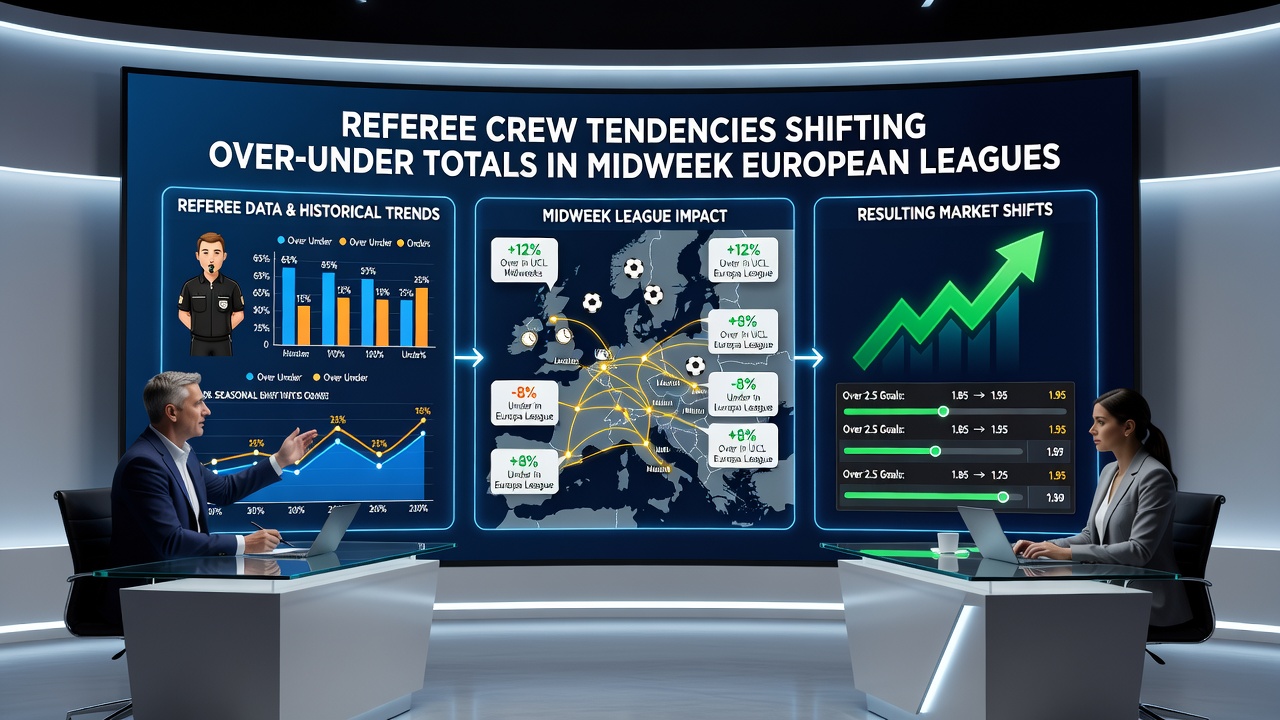
Continental group stage matches add another layer because travel distances increase fatigue. UEFA published crew performance summaries that track distance covered and intensity metrics, and those reports indicate that referees traveling across multiple time zones issue cards at slightly higher rates in the opening 30 minutes, which lengthens the effective playing time available for second half goals.
Market Reactions and Line Adjustments
Betting operators monitor referee assignments as soon as they are confirmed, typically 48 hours before kickoff. Lines move when crews with documented high card rates receive prominent fixtures, and the movement often favors the over because sharp bettors recognize the correlation between disciplinary volume and extended stoppages. Public bettors who follow team form alone sometimes miss these adjustments, leaving value on the opposite side when lines overcorrect.
Historical totals data from the 2024 through 2026 seasons shows that matches assigned to the top quartile of card issuing crews produced an average of 2.87 goals, compared with 2.51 goals for the bottom quartile. The 0.36 goal gap exceeds the standard margin that determines whether a 2.5 total lands over or under, which explains why market makers adjust totals by a quarter or half goal once crew identities become public.
Conclusion
Referee crew tendencies provide measurable signals for over under totals in midweek European leagues because card volume, stoppage length, and foul frequency alter the amount of effective playing time. Observers who integrate crew statistics with schedule compression data identify consistent edges that appear across Champions League, Europa League, and domestic cup competitions. As federations continue releasing detailed performance reports, those signals remain available for analysis ahead of each midweek window.