Seasonal Weather Swings Reshaping NFL Totals Markets During Late Playoff Windows

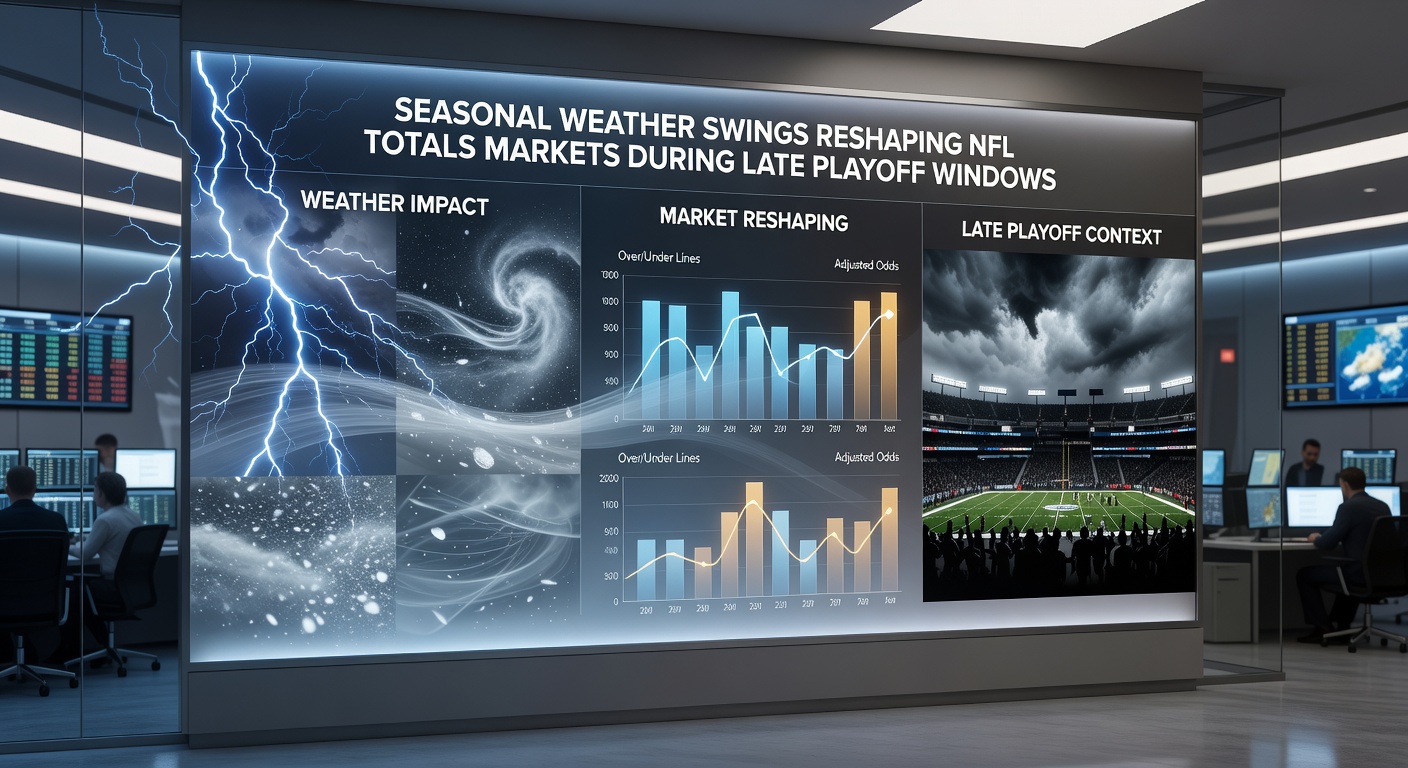
Seasonal weather patterns introduce significant variability into NFL playoff games as temperatures drop and precipitation shifts across late January windows, and these changes directly influence totals markets by altering scoring outputs in measurable ways. Data from recent postseason contests shows that average points per game decline when wind speeds exceed fifteen miles per hour combined with temperatures below freezing, while sudden thaws or heavy snow events create different suppression effects on passing and kicking efficiency.
Weather Variables in Late Playoff Environments
Playoff venues in northern and midwestern cities experience rapid front movements during January, and observers note that these swings often compress game totals below preseason projections. Researchers at the National Oceanic and Atmospheric Administration have documented how Arctic air outbreaks coincide with championship weekends, producing sustained winds and subzero wind chills that favor defensive schemes over offensive production. Teams adjust play-calling toward shorter routes and increased rushing attempts under such conditions, which reduces yardage accumulation and field goal attempts alike.
Coastal playoff sites meanwhile contend with Atlantic or Pacific moisture surges that bring mixed rain and snow phases, and these transitions similarly depress totals because footing becomes unstable and ball security declines. Historical game logs reveal that contests played in precipitation totals above one inch see a consistent drop in completions and explosive plays compared to dry equivalents.
Market Reactions and Line Adjustments
Betting markets respond to these forecasts by shifting totals lines downward when winter storm warnings appear, yet sharp action often arrives after initial public overreactions create value on the under. Line movement data indicates that totals frequently settle two to three points lower than opening numbers once meteorologists confirm sustained cold and wind, and this compression rewards bettors who monitor hourly updates rather than static projections. Sportsbooks incorporate real-time weather feeds into their models, which allows totals to stabilize closer to expected outputs as kickoff approaches.
What's interesting here is how late-day temperature drops after sunset amplify these effects in outdoor stadiums, since field conditions deteriorate further and kicking ranges shorten noticeably. Studies tracking historical playoff totals demonstrate that unders hit at elevated rates once wind chill factors fall below ten degrees Fahrenheit, creating repeatable edges for disciplined market participants who track venue-specific tendencies.
Regional Patterns and Venue Specifics
Stadiums in Green Bay, Buffalo, and Chicago exhibit the strongest correlations between weather volatility and totals suppression, while domed venues in warmer climates show minimal deviation from expected scoring. Analysts compiling multi-year datasets find that open-air northern sites produce totals that land under the closing line in roughly sixty-two percent of January games when temperatures remain below thirty degrees at kickoff. This geographic clustering encourages bettors to prioritize weather models tailored to specific cities rather than league-wide averages.
Transitions between weather regimes within a single playoff weekend add another layer, because a game played on Saturday under clear skies can contrast sharply with Sunday conditions after a cold front arrives. Such intra-weekend shifts force rapid recalibration of totals pricing, and market liquidity sometimes lags behind the latest forecast revisions until later in the week.
Data Sources Informing Current Projections
Academic reviews from institutions such as the University of Michigan's sports analytics group have examined how wind and temperature interact with specific offensive metrics, revealing that quarterback rating drops by an average of twelve points when sustained winds exceed twenty miles per hour. These findings integrate with industry reports that aggregate closing totals across multiple sportsbooks to isolate weather-driven discrepancies. Bettors who cross-reference such sources gain clearer pictures of when lines have over-adjusted to public perception of harsh conditions versus actual on-field outcomes.
Longer-term climate trends also enter planning cycles, since organizations preparing depth charts for future postseasons review historical January patterns to anticipate roster needs. As teams evaluate personnel during May 2026 training periods, weather modeling continues to inform equipment choices and scheme emphases that ultimately feed back into totals expectations when those squads reach subsequent playoff windows.
Conclusion
Seasonal weather swings continue to exert measurable pressure on NFL totals markets throughout late playoff windows, and the interplay between forecast accuracy, line movement, and venue characteristics creates structured opportunities for those tracking meteorological data alongside game logs. Continued refinement of real-time weather integration by oddsmakers and bettors alike ensures that these environmental factors remain central to totals pricing rather than peripheral considerations.