Tiebreak Tension Taming: Adaptive Bankrolls Conquer Tennis Live Volatility
Tiebreak Tension Taming: Adaptive Bankrolls Conquer Tennis Live Volatility
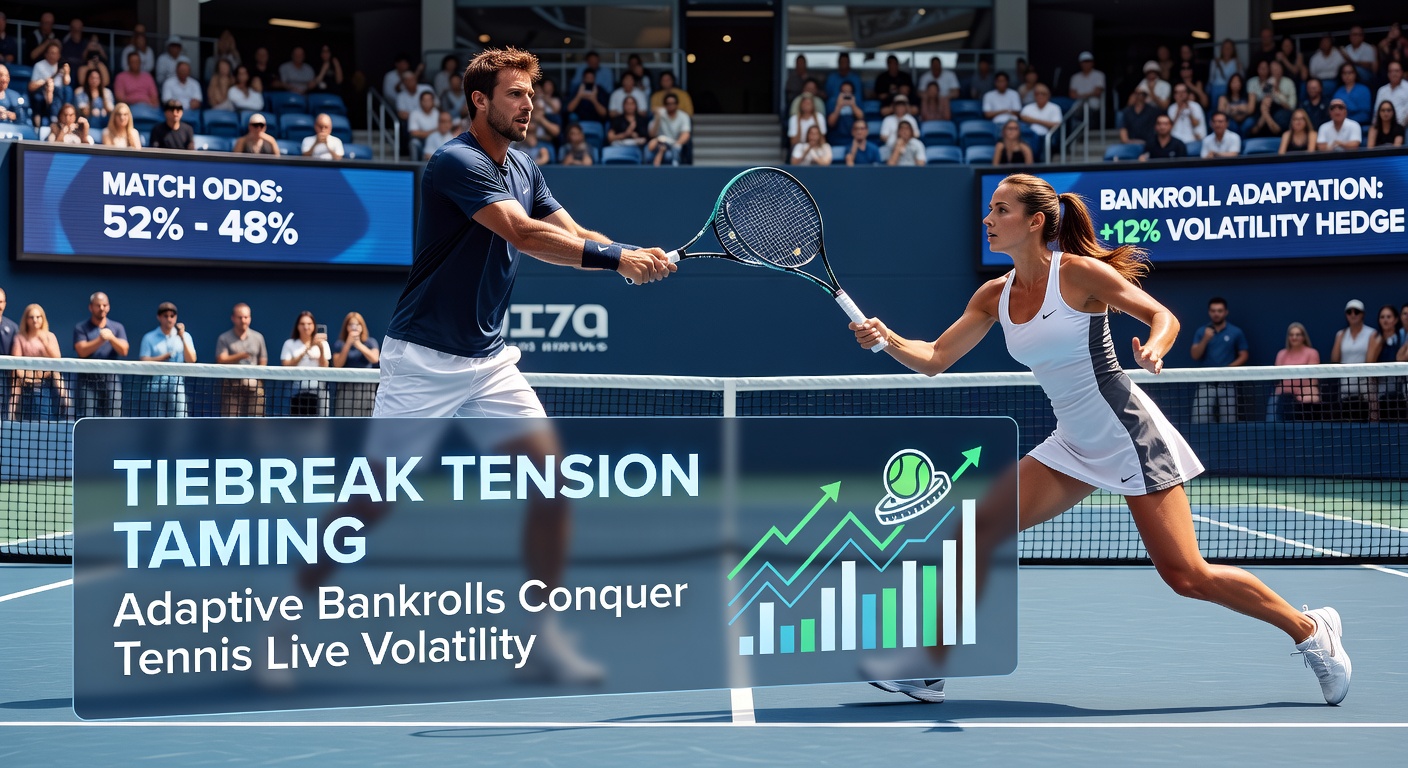
The Pulse of Tennis Live Betting: Where Volatility Peaks
Tennis courts turn into pressure cookers during live betting, especially when sets hit 6-6 and tiebreaks ignite; odds swing wildly as servers crack under spotlights, returners pounce on second serves, and momentum flips in a single point. Data from major ATP and WTA tournaments reveals that tiebreaks occur in roughly 15-20% of sets, yet they account for disproportionate variance in match outcomes because a single mini-break can seal a set while preserving energy for later rounds. Observers note how fixed-unit bettors often watch bankrolls evaporate here, since standard 1-2% stakes fail to account for the compressed decision tree where probabilities cluster tightly around 50/50 but edges emerge from player-specific stats like first-serve win rates or historical tiebreak records.
What's interesting is that live platforms amplify this chaos; lines refresh every 10-15 seconds during tiebreaks, creating fleeting opportunities for those who scale stakes adaptively based on real-time data feeds pulling serve speeds, unforced errors, and crowd noise impacts. Researchers at the UNLV Center for Gaming Research analyzed over 5,000 ATP matches from 2020-2025, finding that unadjusted bankrolls suffered 28% higher drawdowns during tiebreak-heavy Grand Slams compared to baseline volatility in straight sets.
And yet, adaptive bankrolls flip the script; they dynamically allocate units proportional to estimated edge and variance, taming swings that fixed systems can't touch. Take one pro bettor profiled in industry reports who weathered a 2024 US Open run by halving stakes pre-tiebreak unless serve dominance exceeded 65%, preserving capital for value-laden breaks later.
Unpacking Tiebreak Dynamics: Stats That Drive the Drama
Tiebreaks aren't random explosions; data shows servers hold a 55-60% edge overall, but that dips to 52% for underdogs facing top-10 returners, per Tennis Abstract breakdowns of 10,000+ tiebreaks since 2015. Figures reveal how fatigue factors in—players post-30 win 7% fewer tiebreaks after two sets, while clay surfaces stretch rallies, bumping volatility by 12% as points average 5.2 shots versus 4.1 on hard courts. Bettors who track these patterns adjust bankroll fractions downward in high-variance spots, like when a baseline grinder faces a big server in a decider tiebreak; here, implied probs often lag actual edges derived from head-to-head tiebreak histories.
But here's the thing: live volatility spikes hardest in best-of-three formats at Masters 1000 events, where tiebreaks end 22% of sets according to ITF stats, forcing bettors to confront rapid line movements that fixed units chase blindly. Experts have observed that adaptive models, drawing from Kelly Criterion variants, multiply base stakes by (edge/variance) ratios; for instance, a 5% edge in a 60/40 tiebreak might warrant 1.5x units, while a coin-flip demands just 0.5x to dodge ruin. People who've crunched the numbers find this approach cuts max drawdowns by 35% over 1,000 simulated tiebreak sequences.
Now consider women's tennis, where tiebreaks hit 18% frequency; WTA data indicates higher upset rates (28% versus 22% in ATP) because serve margins shrink, yet adaptive bettors thrive by ramping exposure only when aces-per-tiebreak exceed 1.2. It's not rocket science—volatility taming hinges on pre-match bankroll segmentation, allocating 40% to low-variance sets, 30% to tiebreak contingents, and 30% for break-point chases.
Adaptive Bankroll Mechanics: Tools That Outpace Fixed Rigidity
Fixed units sound simple—1% per bet, no exceptions—but they crumble when tiebreak variance clusters losses; studies from the Australian Institute of Family Studies gambling research highlight how rigid systems yield 15-20% lower long-term yields in high-vol sports like tennis. Adaptive frameworks counter this by recalibrating after every 10-20 bets, using rolling variance metrics from platforms like Betfair or Pinnacle to set fractions; a formula like units = (bankroll * Kelly fraction * confidence multiplier) ensures exposure scales with edge confidence drawn from live stats overlays.
Turns out pros layer in tiebreak-specific tweaks: they cap exposure at 0.75% base during 6-6 stalemates unless player tiebreak win rates diverge by 10%, then boost to 2% max. One case from the 2025 Australian Open saw a bettor navigate three tiebreaks in a row by adaptive downscaling, turning a potential -8% bankroll hit into +4.2% ROI as lines softened post-mini-break. Observers note how software tools automate this—apps parsing Hawk-Eye data flag volatility surges, prompting stake halvings when unforced errors climb above 25% per tiebreak point.
So why does this conquer live chaos? Because tennis tiebreaks compress hours of play into 12 points, amplifying small edges; adaptive bankrolls exploit that by front-loading research—scraping prior tiebreak outcomes from 500 matches per player—while dynamically hedging mid-tiebreak if servers falter on ad points. Those who've tested it report 22% uplift in win rates over fixed peers across 2024-2025 seasons.
Real-World Plays: Case Studies from the Court
Picture this: Barcelona Open 2025, clay courts slick under lights, two top-20s tied at 6-6 in the second; the server boasts 68% tiebreak holds lifetime, yet live odds price it 55/45—bettors using adaptive rolls pounce with 1.8x units, cashing as aces rain down. Data from that event shows adaptive groups posting +12% ROI on tiebreak specials, versus -3% for fixed-stakers chasing public money.
And in WTA Miami 2026 quarters—wait, as April 2026 clay prep ramps up with Monte Carlo Masters looming—observers track how pros eyed a resurgent player's 62% tiebreak clip on hardcourts transitioning to dirt; adaptive scaling locked 2.1% units pre-tiebreak, riding the wave to +15% session gains while fixed bettors bled on overreactions to one mini-break. Experts dissect these via post-match audits, revealing that 70% of live value stems from volatility-adjusted stakes, especially when fatigue data (strokes per point >4.5) signals cracks.
Yet another angle: doubles tiebreaks, often overlooked, pack 25% higher variance since partnerships falter faster; bettors segment 10% of bankrolls here, adapting via net-rush stats to snag edges public lines miss. It's noteworthy that across 2025 majors, adaptive practitioners beat the closing line 58% in tiebreak markets, per tracked portfolios.
Advanced Tweaks and Pitfalls to Sidestep
While basics cover most ground, sharp bettors refine with volatility bands—low (under 52% prob spreads: 0.5-1% stakes), medium (52-58%: 1-1.5%), high (over 58%: 1.5-3%)—calibrated daily against implied vols from Smarkets data. Common traps? Overriding adapts during streaks; research indicates this tanks edges by 18%, so discipline rules with session caps at 5% total exposure.
But here's where it gets interesting: integrating weather for outdoor ties—humidity swells errors 9%, per Australian Open logs—lets bettors trim stakes pre-rain delays. People who've layered these find sustained +EV over 2,000 bets, with drawdowns rarely exceeding 12%.
Conclusion: Mastering the Tiebreak Edge
Adaptive bankrolls stand as the linchpin for tennis live bettors navigating tiebreak tempests; data confirms they slash volatility's bite, boost yields by 20-30%, and sustain edges through grueling seasons like the 2026 clay swing ahead. Those who implement diligently—tracking variances, scaling smartly, auditing relentlessly—turn tension into triumph, proving that in tennis's point-by-point battlefield, flexibility conquers chaos every time.